19 Jul 2026
Organizing Themed Gaming Portals: Catalog Methods for Immersive Betting Sites
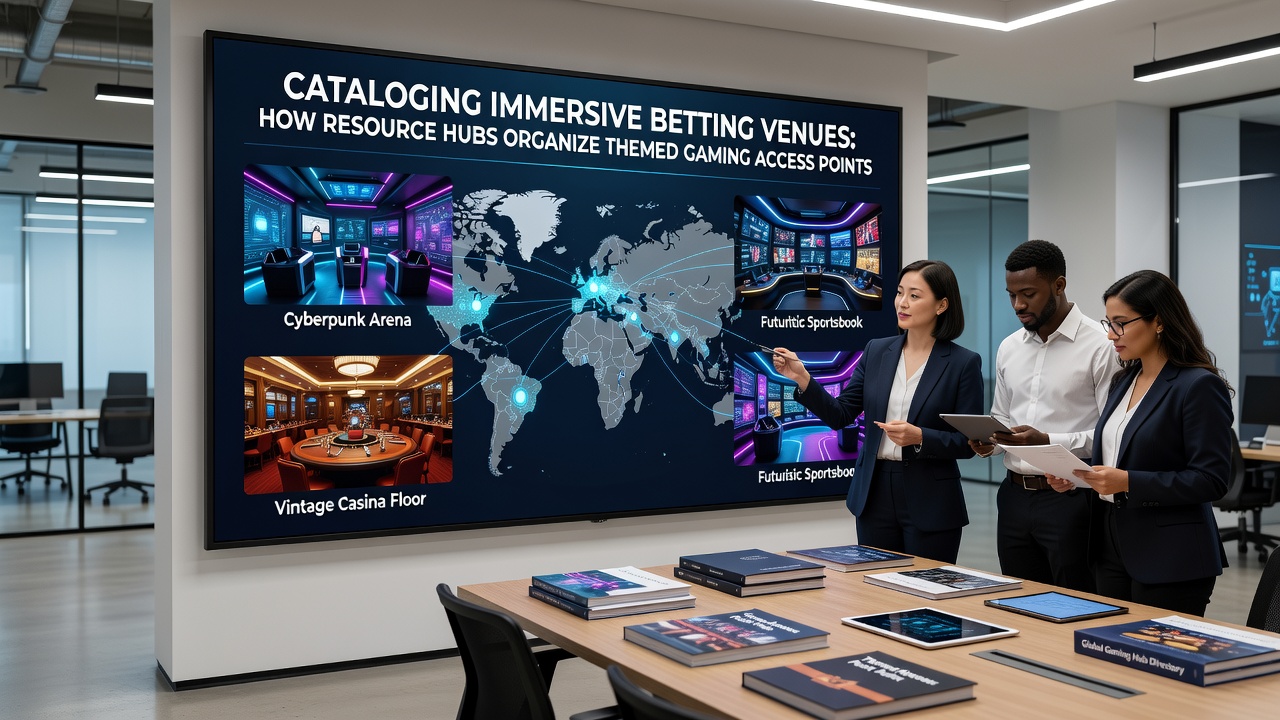
Resource hubs maintain structured systems that group immersive betting venues according to distinct themes and access protocols, and observers note that these organizations rely on metadata tagging combined with user navigation pathways to streamline discovery. Data from industry reports indicates that such catalogs expanded notably between 2024 and 2026, with emphasis on virtual environments that replicate physical casino atmospheres through layered design elements.
Core Cataloging Frameworks
Hub operators apply classification schemas that separate venues by narrative motifs such as futuristic settings or historical recreations, while they integrate search algorithms that prioritize thematic consistency across listed platforms. Researchers at academic institutions have documented how these frameworks incorporate multi-tiered indexing that tracks game libraries, payment interfaces, and regulatory compliance markers simultaneously. Figures reveal that hubs processing over 500 venues typically employ automated crawlers alongside manual verification to update entries each quarter.
One study from a North American research center highlighted the role of API connections in pulling real-time availability data from individual sites, and this integration allows hubs to flag venues undergoing license renewals or system overhauls without manual intervention. Australian regulatory filings from 2025 show similar practices among regional directories, where thematic tags link directly to jurisdictional approval records.
Access Point Organization Techniques
Access points within these hubs route users through themed gateways that bundle related venues, and experts observe that this bundling reduces navigation friction by presenting filtered lists based on preferred atmospheres rather than alphabetical or popularity rankings alone. Government data from Canadian provincial oversight bodies demonstrates that such organization correlates with higher user retention rates on directory platforms during peak periods. Hubs often deploy breadcrumb trails and dynamic menus that adapt according to prior selections, creating pathways that feel continuous rather than segmented.
What's notable is the incorporation of visual mapping tools that display venue clusters on interactive grids, and these tools draw from spatial data models originally developed for urban planning applications. Industry associations across Europe have reported that hubs adopting these visual aids recorded measurable increases in cross-venue exploration by users seeking varied experiences within a single session.
July 2026 Developments and Updates
During July 2026 several hubs implemented revised tagging protocols to accommodate emerging regulatory changes in multiple jurisdictions, and this timing coincided with broader platform migrations toward enhanced mobile compatibility. Records from state-level gaming authorities in the United States indicate that updated catalog entries reflected new compliance standards rolled out that month, while similar adjustments appeared in directories serving international audiences. These shifts allowed resource centers to maintain accurate listings even as certain physical-adjacent venues transitioned operations or adjusted licensing status.

Hubs that completed these updates ahead of schedule reported smoother integration of new access points, and data shows that synchronized catalog refreshes helped prevent broken links during periods of regulatory flux. Observers note that the July window proved particularly active because multiple oversight agencies released consolidated reports around the same dates.
Metadata Standards and Verification Processes
Standardized metadata fields capture elements such as theme intensity ratings, supported languages, and bonus structure types, and verification teams cross-reference these fields against primary source materials from each venue. Academic papers published in 2025 detail how consistency in metadata application enables comparative analysis across different hubs, revealing patterns in how certain themes attract specific demographic segments. European trade groups have promoted voluntary guidelines that encourage uniform field definitions, although adoption remains uneven across regions.
Automated checks flag discrepancies in real time, while human reviewers handle edge cases involving newly launched or rebranded sites. This dual-layer approach keeps catalogs current without overwhelming operational resources, and reports from Canadian research networks confirm its effectiveness in high-volume environments.
Conclusion
Resource hubs continue refining their organizational methods to keep pace with evolving themed gaming landscapes, and the combination of algorithmic tools with regulatory cross-checks forms the backbone of effective cataloging systems. Evidence from multiple jurisdictions indicates that these practices support clearer access pathways for users while maintaining accurate records of venue status and features. As thematic designs grow more sophisticated, the underlying catalog structures adapt through incremental improvements rather than wholesale redesigns, ensuring sustained functionality across diverse platforms.