10 Jul 2026
Mapping Player Journeys in Themed Digital Gaming Spaces: Navigation Strategies and Incentive Systems at Specialized Venues
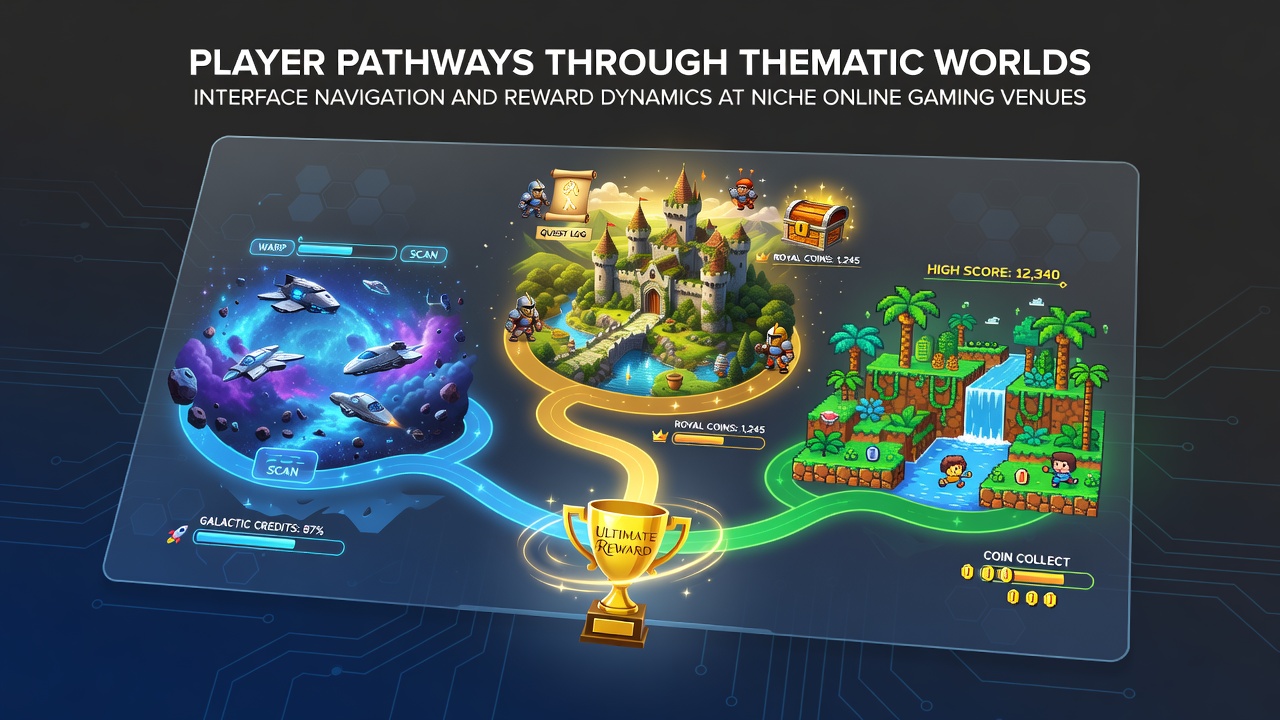
Specialized online gaming platforms organize their interfaces around distinct thematic worlds that guide player movement through layered menus, quest-like progressions, and visual cues tied to specific narratives. These structures appear in venues such as Scifi Casino and Breakaway Casino, where designers embed navigation paths that align with space exploration or escape themes, allowing users to move between game categories via portals rather than standard lists. Research from the University of Nevada, Las Vegas International Gaming Institute shows that thematic layering increases session duration by directing attention toward sequential challenges that unlock new areas.
Observers note that players often begin at a central hub screen displaying core categories like slots, table games, and live dealer options framed within the overarching story. From there, clicking a portal transitions the view into a sub-world where additional filters appear as in-game objects, such as control panels or maps. Data from industry reports indicate that this method reduces the number of clicks needed to reach a preferred title compared to traditional casino directories, since each transition builds context for the next choice.
Interface Elements That Shape Movement Patterns
Design teams at niche venues incorporate consistent visual anchors like glowing nodes or animated pathways that remain visible across screens, helping users maintain orientation during extended play. In one documented case, a platform using an adventure motif placed reward meters along a virtual trail that users followed to access bonus rounds, and tracking logs revealed that participants returned to previously visited nodes more frequently than expected. Such patterns suggest that spatial memory plays a role when interfaces mimic real-world exploration.
Additional controls include search bars disguised as communication devices or inventory panels that list recent activity, while pop-up tooltips provide brief explanations without interrupting flow. Figures from the Australian Institute of Criminology gaming studies reveal that platforms adopting these disguised tools report lower abandonment rates during initial sessions, since new users receive guidance embedded in the theme rather than separate help sections.
Reward Structures Integrated With Thematic Progression
Multi-tiered loyalty programs at these venues tie advancement to completion of themed objectives, where players accumulate points by completing navigation milestones or engaging with specific game clusters. For instance, reaching a higher tier might require traversing a certain number of virtual zones, each containing targeted game selections that contribute to overall progress. Evidence from the Nevada Gaming Control Board annual summaries demonstrates steady growth in player retention metrics when rewards scale with exploration depth rather than simple deposit volume.
Daily and weekly challenges often appear as side quests displayed on a persistent sidebar, prompting users to visit new sections of the interface for incremental bonuses. Those who studied these systems note that combining narrative goals with point multipliers encourages repeated returns, particularly when tiers reset on monthly cycles that coincide with seasonal theme updates. In July 2026, market adjustments following the closure of certain physical border properties highlighted how virtual venues maintained engagement through flexible digital reward resets that adapted to shifting player bases.
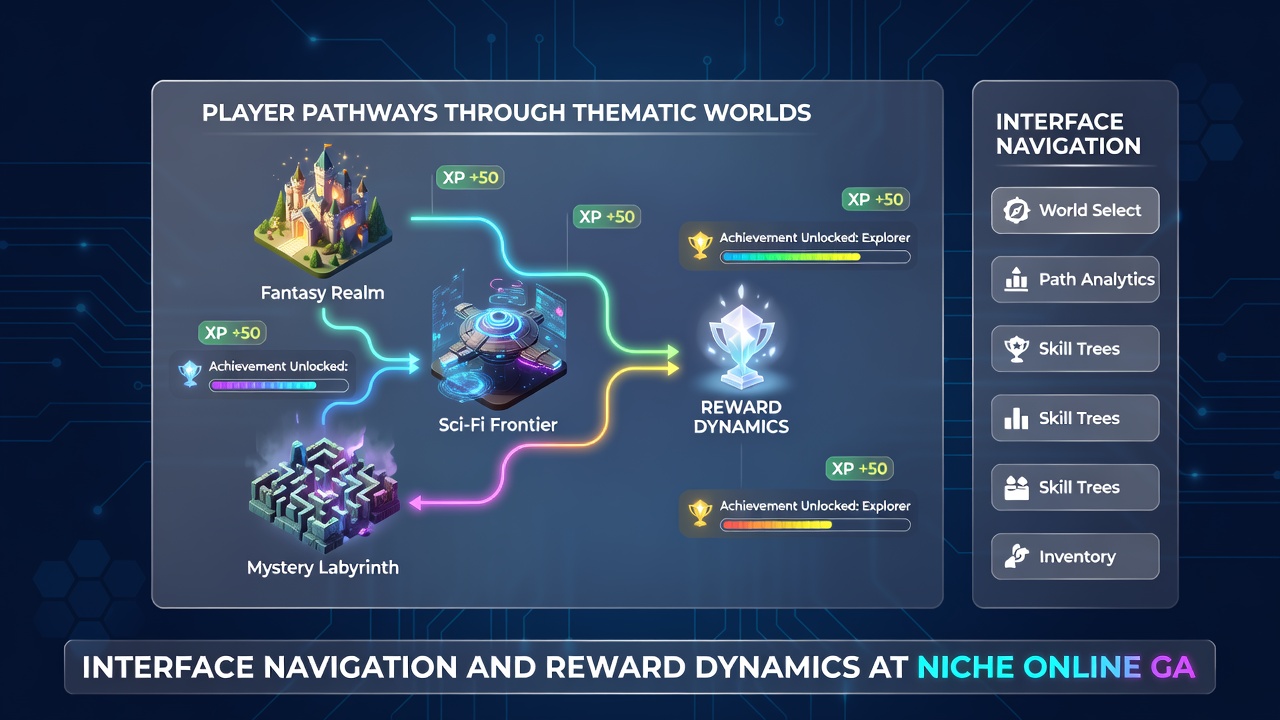
Comparative Navigation Across Platform Variants
Scifi-themed sites typically route players through sequential star system maps that expand as loyalty levels increase, whereas adventure-focused layouts use branching trail diagrams that allow backtracking without penalty. Both approaches share the trait of hiding administrative functions behind thematic overlays, such as a captain's log for account settings, which keeps the primary experience immersive. Tracking data collected by the European Gaming and Betting Association indicates that sites blending these methods achieve higher average time spent per visit when navigation feels purposeful rather than utilitarian.
Players who engage with these systems frequently discover that completing one pathway unlocks shortcuts for subsequent visits, streamlining access to favored content while preserving the sense of discovery. This mechanic appears in multiple niche venues and aligns with broader patterns observed in user behavior analytics, where repeated navigation reinforces habit formation without requiring external prompts.
Conclusion
Thematic world design in niche online gaming continues to evolve through deliberate interface choices that connect navigation steps with reward accumulation. Available data from regulatory summaries and academic tracking studies show measurable effects on how users locate games and advance through loyalty structures, with patterns emerging across different thematic implementations. These elements operate within an environment influenced by external events, including venue closures and licensing renewals, yet maintain consistent internal logic for player movement and incentive delivery.